Ever spent hours setting up your camera, only to realize your footage looks worse than your old smartphone? I’ve been there. I remember the frustration of investing in what everyone touted as the “best” gear, only to be disappointed with shaky videos, poor lighting, or pixelation. That lightbulb moment hit me hard: I was focusing on the wrong equipment and missing out on what truly makes content pop. Since then, I’ve learned a thing or two about what it takes to create professional-looking videos for Shorts and YouTube in 2025, even on a budget.
Why Your Gear Can Make or Break Your Content in 2025
High-quality content isn’t just about having a fancy camera; it’s about understanding what tools will elevate your videos without breaking the bank. Today’s creators need to balance affordability with top-tier performance. As the market shifts, especially with the rise of 4K streaming and Shorts, having the right setup is more crucial than ever. I’ve seen creators blow through money on gear that’s overkill or, worse, underperforming. The trick is knowing what features really matter — and how to choose them wisely.
According to a recent report from Content Creator Journal, 4K streaming gear has become accessible and affordable, but not all cameras are created equal. Picking the right one can be confusing, especially with the flood of options claiming to be “the best.” That’s why I want to help you cut through the noise and find gear that actually delivers.
If you’ve ever bought a camera that promised cinematic quality but ended up with grainy footage or poor autofocus, you’re not alone. I made this mistake early on, and it cost me precious time and content quality. The good news? With just a few strategic upgrades, I was able to dramatically improve my videos, making them more engaging and professional-looking. And I want to share those secrets with you.
Is the Latest Tech Really Worth the Hype?
It’s easy to fall into the trap of thinking you need the newest, shiniest gear. But do you really? I’ve found that understanding your content style and goals is more important. For instance, if you’re doing quick Shorts, a compact mirrorless camera with excellent autofocus and 4K capability might be all you need. If live streaming is your thing, a reliable streaming camera with clean HDMI output makes a world of difference.
Remember, I once wasted hundreds on expensive gear only to realize I wasn’t using half its features because I didn’t understand them. That’s why I recommend starting with a clear plan and then choosing gear that aligns with your needs. Want to learn more? Check out top mirrorless cameras for Shorts and see what fits your style.
Ready to find your perfect setup? Let’s dive into the practical steps that will help you pick the best streaming camera and 4K equipment for your content creation journey in 2025.
Choose Your Focus Before Buying
Start by clarifying what kind of content you want to produce. Are you aiming for quick, punchy Shorts or longer, detailed YouTube videos? This decision influences the camera features you should prioritize. For Shorts, a compact camera with fast autofocus and good stabilization is critical. For YouTube, consider a camera with better audio options and higher bitrates. I once jumped into buying a high-end camera without this clarity, only to realize I wasted money on features I didn’t need. Defining your content style first saves you from costly mistakes.
Match Your Budget With Key Features
Next, set a realistic budget. Remember, you don’t need the most expensive gear to look professional. Think of your camera as a car: you don’t need a Ferrari if a reliable sedan gets you from A to B. Focus on essential features like 4K recording, good autofocus, and reliable low-light performance. For example, I found that a mid-range mirrorless camera like the top mirrorless models for Shorts offers excellent value. It’s about smart investments that match your specific needs.
Pick a Camera That Fits Your Content Style
When I upgraded to a mirrorless camera, I chose one with a flip-out screen and excellent autofocus because I often shoot solo. This made framing and focusing much easier, especially during on-camera vlogs. Think of your camera like a partner: select one that complements your workflow. For live streaming, a camera with clean HDMI output is a game-changer. For example, check out these streaming cameras that integrate seamlessly with streaming setups.
Evaluate Technical Specs Like a Pro
Don’t get overwhelmed by specs. Instead, focus on key specs that impact your videos: resolution, autofocus speed, low-light performance, and stabilization. I once bought a camera with incredible specs on paper but found its autofocus sluggish. That’s why I recommend reading reviews and watching sample footage. For an in-depth comparison, visit this detailed guide to the best 4K cameras for creators.
Test and Tweak Before Going Live
Before committing, test your chosen gear in real scenarios. Record some Shorts or do a live test stream. Notice how the camera performs in different lighting and movement conditions. I once set up a new camera for a live session and realized the autofocus was hunting a lot. Adjustments like firmware updates or changing settings made a huge difference. The key is to familiarize yourself with your gear and optimize it for your environment.
Stay Updated on New Gear Releases
Technology advances rapidly. Regularly check trusted sources like these expert reviews to stay ahead. Sometimes, a small upgrade—like a better lens or an external mic—can dramatically improve your content quality without replacing your entire setup.
Many aspiring creators fall into the trap of believing that more expensive or feature-rich cameras automatically lead to better content. Let’s dig deeper into what most people get wrong—especially when it comes to advanced nuances that can make or break your video quality in 2025. The common myth is that having the latest tech guarantees success, but in reality, the real game-changer lies in understanding how to optimize your gear and avoid costly mistakes.
Why Overlooking Autofocus Can Sabotage Your Footage
One of the most overlooked aspects by content creators is autofocus performance. Many assume that resolution and sensor size are the most critical factors, but in practice, autofocus speed and accuracy are often more impactful, especially for dynamic shooting styles. A camera with excellent autofocus ensures you stay sharp during movement or when switching scenes, which is vital for professional-looking videos. Interestingly, some high-end models still struggle with autofocus in certain conditions, so always check reviews and sample footage. For an in-depth comparison, visit this guide.
Common Mistakes When Upgrading Your Gear
Many creators make the mistake of constantly chasing the newest gear without mastering their current setup. They buy that latest mirrorless camera or lens, expecting instant results, but neglect to learn about proper lighting, framing, or audio. Remember, even the best camera can’t compensate for poor lighting or bad sound. A well-balanced setup with good lighting and audio often trumps a high-end camera in terms of content quality. For tips on optimizing your existing gear, check out this resource.
Are Megapixels Truly the Key to Better Videos?
Contrary to popular belief, more megapixels do not necessarily translate into higher-quality videos. In fact, a camera with a balanced sensor size, good low-light performance, and reliable stabilization often yields better results. Higher megapixels can lead to larger files and slower processing, which is a disadvantage if your editing setup isn’t optimized. Instead, focus on features like dynamic range, autofocus, and stabilization. For professional insights, see this comprehensive guide.
Have you ever fallen into this trap? Let me know in the comments. Remember, the key to successful content creation is not just gear, but how you use it. Invest in understanding your tools, and you’ll produce content that truly stands out in 2025 and beyond.
Once you’ve invested in the perfect camera setup for your Shorts or YouTube videos, the journey doesn’t end there. Maintaining your equipment over time ensures consistent quality and longevity. In this section, I’ll share my proven methods for keeping your gear running smoothly, along with some tools I swear by that help streamline maintenance and troubleshooting.
How do I maintain my gear over time?
Regular cleaning is the foundation of gear maintenance. I use a microfiber cloth and a gentle lens cleaning solution to wipe down my camera lenses and sensors after every few shoots. This prevents dust and smudges from accumulating, which can degrade image quality. For internal parts, I recommend periodically updating your firmware—this improves performance and fixes bugs. Check your camera manufacturer’s website or trusted sources like this guide for the latest updates.
Another key aspect is keeping your SD cards and batteries in good condition. I use a dedicated battery maintainer that ensures optimal charge cycles, extending the lifespan of my power sources. For storage, I keep my SD cards in airtight cases to prevent corrosion and data corruption. Regularly backing up footage to a reliable external drive or cloud service is also crucial—don’t let a corrupted card ruin your hard work.
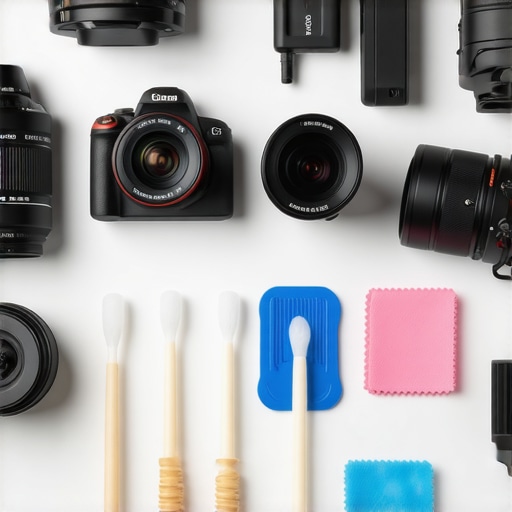
Tools like compressed air blowers and sensor cleaning kits are indispensable. I use a sensor cleaning swab for my mirrorless camera’s sensor about twice a year, or whenever I notice dust spots in my footage. Be cautious and follow manufacturer instructions to avoid damaging sensitive components.
Anticipating future trends, I believe AI-powered diagnostics and remote maintenance tools will become standard for professional content creators. These innovations will allow for quicker troubleshooting and even automatic firmware updates, reducing downtime.
If you haven’t already, invest in a good toolset for ongoing maintenance—these will save you time and money in the long run. For example, I personally rely on a sensor cleaning kit and a microfiber cleaning cloth. Regular upkeep ensures your gear performs at its best, giving you peace of mind during crucial shoots.
Try incorporating a monthly maintenance routine using these tips and tools. It might seem small, but over time, it will keep your content sharp and your workflow smooth. Remember, well-maintained equipment isn’t just about reliability—it’s about delivering professional quality consistently. Stay ahead of technical issues, and your audience will notice the difference.
The Hardest Lesson I Learned About Choosing Content Creation Cameras
One of the toughest lessons was realizing that my obsession with megapixels was a distraction. I believed more megapixels meant better videos, but I overlooked the importance of autofocus, stabilization, and low-light performance. It took me countless failed shoots before I understood that a balanced sensor and reliable autofocus truly make a difference. This insight saved me thousands of dollars and countless hours of frustration.
Three Myths About Content Creator Gear That Held Me Back
First, I bought into the myth that only expensive cameras deliver professional results. Turns out, many mid-range models offer excellent quality if used correctly. Second, I thought newer models are always better—sometimes, last year’s tech is still more than enough. Lastly, I believed that more accessories are always necessary; in reality, focusing on core features and proper lighting can outperform a cluttered setup. Breaking these myths transformed my workflow and boosted my confidence.
What Experts Won’t Tell You About Upgrading Your Video Setup
Many pros keep quiet about how essential good lighting and sound are—they often say “invest in a good camera,” but neglect to mention that even the best camera can’t fix poor audio or lighting. I learned that upgrading my microphone and lighting setup had a far greater impact on my content quality than simply swapping my camera. This revelation pushed me to prioritize holistic quality over just hardware specs.
Curated Resources for Content Creators
- My Essential Toolkit for 4K Content: I trust this guide because it breaks down affordable, high-performance gear tailored for creators focusing on Shorts and YouTube videos, helping me make informed decisions without overspending. Learn more here.
- Top Camera Reviews and Comparisons: I rely on this resource for in-depth reviews of the latest mirrorless cameras, ensuring I pick models with excellent autofocus and low-light capabilities. It’s my go-to before any upgrade. Check out the reviews.
- Lighting and Audio Tips for Beginners: This site offers practical advice on affordable lighting setups and microphones that significantly enhance video quality, proving that good content is about more than just the camera. Explore the tips.
Your Turn to Try
Embrace the learning curve and remember that your gear is just one piece of the puzzle. Confidence and creativity often matter more than the latest tech. Start small, focus on mastering your current setup, and gradually upgrade as you grow. The future of content creation is bright for those willing to learn and adapt.
What’s been your biggest challenge when upgrading your camera or setup? Share your experience below—I’d love to hear your story!
This post hits so many important points. When I first started creating content, I was obsessed with getting the latest camera gear, thinking it would automatically improve my videos. However, I quickly realized that understanding how to use what I already had—like lighting, framing, and sound—made a much bigger difference. A good tip I found helpful was to start with a solid, affordable camera and gradually add accessories like external microphones and better lighting as my budget allowed. It’s all about optimizing what you have and knowing your priorities based on your content style. Have you guys found that focusing on these areas has helped boost your quality without blowing your budget? I’m curious how others balance tech upgrades with mastering their existing gear.
This post resonates with me because I’ve also learned that investing in the right accessories can make a huge difference without needing the latest high-end camera. For instance, I recently added an external mic and better lighting, and the quality boost was incredible, even though my camera hasn’t changed. It made me think about how many creators overlook the importance of sound and lighting when they focus solely on upgrading their cameras.
I do wonder, though, for those who are on a tight budget, what are some affordable gear upgrades that deliver the most noticeable improvements? Has anyone found specific brands or products that really punch above their weight? I believe that understanding the core essentials—like good audio and proper lighting—can truly elevate content, regardless of the camera used. Curious to hear everyone’s tips on maximizing small upgrades for big results in 2025.
I totally relate to the point about autofocus being a game-changer. I used to overlook how much autofocus speed and accuracy can make or break the professionalism of a shot—especially in dynamic scenes or when I’m filming solo. Since I upgraded to a camera with better autofocus, my videos look much sharper, and I spend less time rerecording due to focus issues. One thing I’ve learned is that sometimes, simpler features—like good stabilization and decent low-light performance—can actually make a bigger difference for content creators on a budget, rather than chasing the latest high-end specs. I’m curious, how do others balance investing in tech versus improving skills like lighting and framing? For me, I’m finding that focusing on mastering how I use my existing gear makes a huge impact before spending on new equipment.